
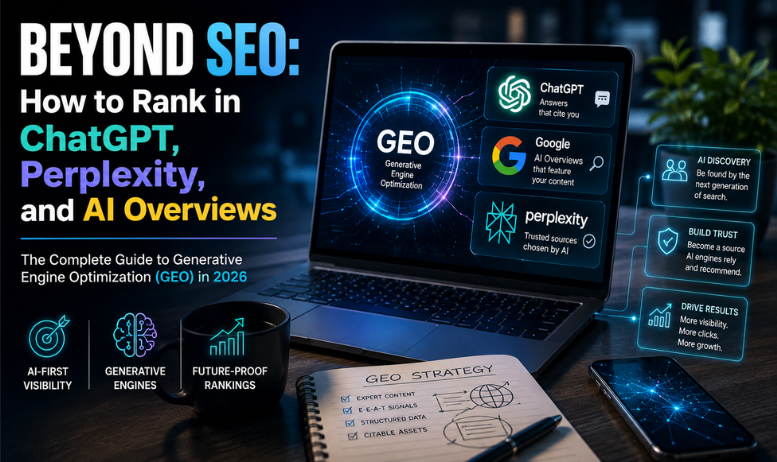
Generative Engine Optimization (GEO): How to Rank Your Content in ChatGPT, Google AI Overviews & Perplexity in 2026
Generative engine optimization (GEO) is the practice of structuring content so AI engines ChatGPT, Google AI Overviews, Perplexity, Copilot- quote it inside their answers. It fuses classic SEO signals with clear entities, extractable facts, and strong E-E-A-T. The goal shifts. Get cited, not just ranked.
A lot of searches now end without a single click. Generative engine optimization is how you stay visible when that happens. At TechEnvision, we’ve spent 15+ years and 1000+ client projects watching search change shape and this is the sharpest turn we’ve seen. Rankings used to be the finish line. The AI-written answer is the new one. If a chatbot explains your topic and never names you, the buyer’s gone before a link ever loads. This guide shows how to earn those citations. No padding. Just what’s working.
What is GEO? Generative engine optimization is the process of shaping content so generative AI systems select, trust, and cite it when they build answers. It rewards machine-readable structure, clearly defined entities, credible sources, and plain factual claims the exact signals language models use to decide what to quote.
What Is Generative Engine Optimization (GEO)?
GEO is SEO written for answers instead of blue links. Same foundations good content, clean structure, real authority. New target. You’re optimizing to be the sentence an AI lifts, not just position four on page one.
GEO vs. AEO (Answer Engine Optimization): Clearing the Confusion
People mix these up constantly. AEO targets featured snippets and voice answers one clean response to one question. GEO is broader. It covers how generative models synthesize multiple sources into a paragraph. AEO is a subset. GEO is the whole game.
Why GEO Matters for Digital Marketers in 2026
Search behavior moved. Your strategy has to move with it.
1.The Shift from Blue Links to AI-Generated Answers
Users ask. The engine answers. Fewer scroll to ten links. If your content isn’t in that generated summary, you’re invisible even ranking #1. Truth is, being right and being uncited pays the same. Nothing.
2.How AI Overviews & Chatbots Choose Their Sources
According to Google Search Central, AI Overviews still lean on core ranking systems helpful, reliable, people-first content. So the fundamentals hold. Models favor pages that state facts cleanly, cite sources, and match intent tightly. Vague, padded posts get skipped.
How Generative Engines Pick and Cite Content
Signals AI Models Prioritize (Authority, Structure, Freshness)
Three levers do most of the work:
- Authority: who’s saying it, and do others trust them.
- Structure : headings, lists, and short answer blocks a model can parse fast.
- Freshness: recent data, updated dates, current examples.
The Role of Schema, Entities & Structured Data
Schema markup tells machines what your content means, not just what it says. Article, FAQPage, HowTo, Organization. Define your entities the concept, the metric, the tool before explaining function. Clear entities equal easy citations.
How to Optimize Your Content for GEO (Step-by-Step)
- Write for extractable, quotable answers. Lead each section with a tight, standalone claim under 30 words. A model can lift it whole.
- Strengthen E-E-A-T and author signals. Add a named author, credentials, and real experience. We’ve fixed hundreds of sites that ranked fine yet stayed uncited almost always thin on author trust.
- Use statistics, sources, and original data. Numbers anchor credibility. Cite Google, Ahrefs, or your own audits. “According to…” beats “studies show.”
- Structure with clear headings, lists, and FAQs. Short paragraphs. Descriptive H2s phrased as questions. FAQs at the end for snippet pickup.
GEO Tools & How to Measure AI Search Visibility
You can’t improve what you don’t track. Watch mentions inside ChatGPT and Perplexity answers. Use Google Search Console for AI Overview impressions. Tools like Ahrefs and SEMrush now flag AI-driven visibility. Run prompt tests monthly ask the engines your target questions and see who they name.
Common GEO Mistakes to Avoid
- Burying the answer under 300 words of throat-clearing.
- No schema. No entities. Machines guessing.
- Unsourced claims a model won’t risk quoting.
- Stale posts with a 2023 date and dead examples.
- Keyword stuffing. It reads like a shop with no signage loud, empty, ignored.
Use Cases / Real Results
- Local business: Local SEO plus entity-rich service pages got a client named in “best near me” AI answers.
- E-commerce store: Structured product data cut wasted PPC spend and lifted qualified traffic.
- Slow site bleeding leads: Fixed Core Web Vitals the leaky bucket stopped draining, conversions recovered.
- Startup: Built topical authority cluster by cluster until AI engines treated it as a source.
See how we do this on our SEO services page.
Challenges & Solutions
Thin content won’t rank or get cited. We rebuild it around entities, real data, and clear answers. High ad spend, low ROI. We tighten targeting and landing pages to lift ROAS and drop CPC. Unmaintained sites. Ongoing maintenance keeps speed, indexing, and freshness where models expect them.
GEO Checklist: Optimize Your Next Article for AI Search
- Quick-answer block under the title
- Entity defined before function
- 2–3 quotable standalone sentences
- Named author + credentials
- Cited sources with real numbers
- Article + FAQ schema added
- Short paragraphs, question-style headings
- Updated date and current data
Search is changing faster than most teams can retool. But the core hasn’t moved: earn trust, state facts plainly, make your content easy for both people and machines to quote. Do that, and citations follow in Google, in ChatGPT, in Perplexity. TechEnvision has helped 1000+ businesses turn traffic into leads and sales across 15+ years, and GEO is simply the next place we do it. Want to be the answer, not just a link? Let’s build content the engines can’t ignore.
FAQs
Question: Will AI search replace SEO?
Answer: No. It reshapes it. Core signals helpful content, authority, structure still decide who gets cited. GEO extends SEO into AI answers; it doesn’t erase the fundamentals you already need.
Question: How do I get cited by AI chatbots?
Answer: Write clear, standalone answers under 30 words, define your entities, add schema, cite credible sources, and show real author expertise. Models quote content they can parse fast and trust.
Question: Is GEO the same as answer engine optimization?
Answer: Not quite. AEO targets single-answer snippets and voice search. GEO is broader optimizing how generative models synthesize many sources. AEO sits inside GEO.
Question: How long does GEO take to work?
Answer: Months, not days. Like SEO, it compounds. Freshness, authority, and structured content build citation visibility gradually anyone promising overnight AI rankings is selling something.