
AI Search Optimization: How to Actually Win in Generative Search in 2026
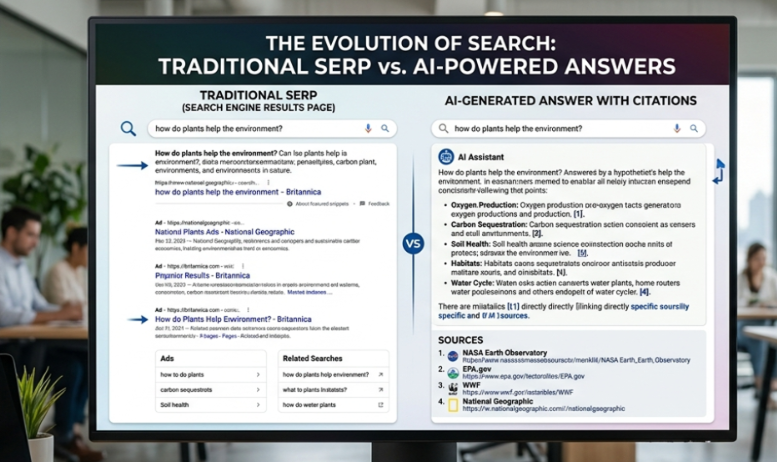
Here is thing , if you are still stressing over number one rankings on a blue link search page you are playing a game. Search did not just update it flipped. People are not scrolling through ten links anymore. They are asking AI a question. Waiting for a straight answer. If your content is not built to feed those answers you are invisible before the user even sees your URL.
You probably already feel it. Traffic is flat. Click through rates are dropping.. The usual SEO tricks just are not moving the needle like they used to.
Let us clear something up now. AI search optimization is not some side project. It is the reliable way to get your name mentioned when ChatGPT, Gemini or Perplexity puts together a response. The goal shifted. You are not just fighting for a click anymore. You are fighting to be the source these models actually trust.
Here is where it gets interesting.
How Generative Search Actually Works
ChatGPT Google Gemini, Perplexity they do not rank pages. They evaluate them. They pull facts check sources and stitch answers together in time. Your job is not to outrank the competition. It is to become the reference material.
– Google Gemini : wants factual structures. No fluff. Just straight data it can parse.
– Perplexity AI: rewards depth and fresh information. It literally shows its citations so your sourcing has to be tight.
– ChatGPT : comes down to authority. It leans on RAG, which means it pulls from brands it already recognizes as go to experts.
We call this Generative Engine Optimization.. If you are not in the mix when an AI answers a complex question you might as well not exist online.
Look at what we saw happen year. A B2B SaaS client sat comfortably at number four for project management tools for teams. Traffic was fine. Then Perplexity started pulling a three tool comparison. The client got left out completely. Their pipeline dropped thirty five percent in a month.
They did not buy backlinks. They tore down their comparison guides. Rebuilt them. Clear entity definitions. Live feature matrices. Direct source citations. Three weeks later Perplexity was citing them as the option. Traffic bounced back. The lead quality actually went up.
Execution Strategies That Actually Move the Needle
Here is how you actually fix it. You stop playing keyword matchmaker. Start building content the way AI reads it.
1. Stop guessing what people type. Write what they ask.
AI gets context. Map your content to the questions users type into chat boxes.
– Old way: CRM integration
– New way: How to connect our CRM to email campaigns for a five person team
Solve the problem. Do not just chase the search volume.
2. Think in entities, not keywords.
Models do not scan for words. They connect concepts, brands, software names, features and how they relate. If your site uses five names for the same tool the AI gets confused. Pick one. Link your articles together so the AI sees a web of expertise. You will cut down hallucinations. Get cited more accurately.
3. Schema markup is non negotiable.
Treat Schema like a translator for your website. It tells the AI what you are selling, who wrote it and how everything connects.
Focus on these four
- Article
- Product
- FAQ
- HowTo
It is not just about pretty star ratings anymore. It is about handing the AI a data file so it pulls your information instead of guessing.
Quick win: A local home services company we work with added LocalBusiness and Service schema. When someone asked Gemini for emergency plumber near me the AI pulled their rating, service radius and booking link straight into the chat. That is the kind of routing you want.
4. Chase featured snippets like your pipeline depends on it.
AI scrapes snippets. Constantly. Write direct, forty to sixty word answers at the top of your post. Use bulleted lists. If you own that box you are practically guaranteed to be the AIs go to citation.
Building Authority the AI Actually Trusts
Now here is the catch. All the structure in the world will not save you if your content feels hollow. AI filters for trust first. E E A T is not a checklist you slap at the end of a post. It is the standard.
Prove you have done the work. Thin content gets filtered out immediately. Publish data. Put author bios with actual credentials on every post. Cite the study, not some third tier blog that summarized it. If you cannot back up what you are saying the AI will not risk sending you traffic.
Do not sleep on voice search. People talk to their phones differently than they type. They ask longer questions. Write your answers to match language. You are not just optimizing for a bot. You are optimizing for how humans talk.
Track where you show up. You cannot fix what you do not measure. Use tools to check if AI is even citing your pages. If your competitor keeps popping up look at how they structure their answers and what credentials they flash. Then match it.
Where This Is Heading: Search Experience Optimization
Let us be honest. None of this matters if your site drives them away the second they land. That is why Search Experience Optimization is taking over. AI might hand them a link. Your site has to close the deal.
Keep it tight:
- Audit your tech stack: Make sure AI crawlers can actually read your pages without tripping over scripts.
- Refresh old posts on a schedule: AI favors data. Stale content gets ignored.
- Match on page with off page: If your site says you are the expert but nobody else, on the web mentions you the model will doubt you.
The Bottom Line
Here is what you need to take stop stuffing keywords. Start making your content answer first. Build it clear prove you know what you are talking about and structure it so a machine can read it in three seconds
Ready to see if your content actually survives the search landscape? Open up your ten traffic driving pages right now. Ask yourself:
- Is the schema set correctly?
- Are the core topics clearly defined without jargon?
- Does it read like a real expert wrote it or a content mill?
Fix the ones first. Update the data. Make it impossible for an AI to ignore you. That is how you stay visible when the old search page disappears.