
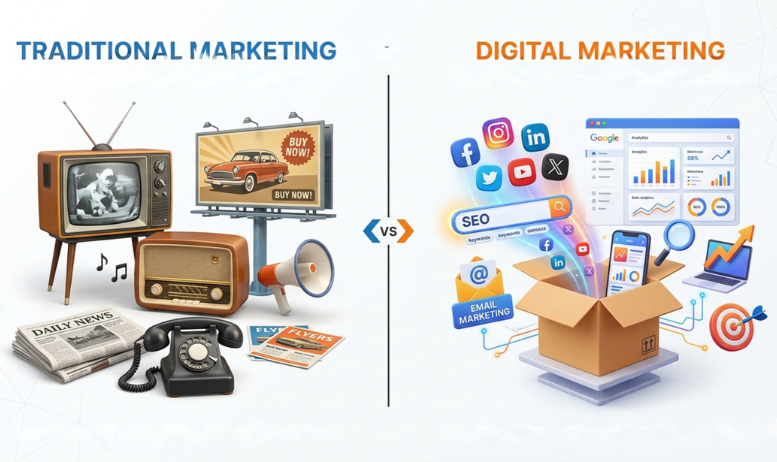
Old Marketing vs New Marketing: The Digital Shift You Can’t Ignore
Marketing has changed dramatically over the years. Businesses are no longer limited to newspapers, TV ads, radio promotions, or roadside hoardings. Today, digital platforms allow brands to reach the right audience with better targeting, measurable performance, and higher engagement.
The shift from traditional marketing to digital marketing has completely transformed how businesses connect with customers.
What is Traditional Marketing?
Traditional marketing refers to offline promotional methods used before the rise of the internet and digital platforms.
Common Examples of Traditional Marketing
- Newspaper advertisements
- Television commercials
- Radio promotions
- Billboards and hoardings
- Flyers and pamphlets
Traditional marketing mainly focused on reaching a broad audience without specific targeting.
Limitations of Traditional Marketing
- Difficult to track performance
- High advertising costs
- Limited audience targeting
- One-way communication
- Uncertain return on investment (ROI)
For example, a TV advertisement may reach thousands of viewers, but businesses cannot accurately measure who watched the ad or how many customers converted.
What is Digital Marketing?
Digital marketing uses online platforms and internet-based channels to promote products and services.
Today, businesses use digital marketing to connect with customers through:
- Social media platforms
- Search engines
- Websites
- Email marketing
- Online advertisements
Unlike traditional marketing, digital marketing is data-driven, measurable, and highly targeted.
Key Features of Digital Marketing
1.Highly Targeted Advertising
Businesses can target users based on:
- Age
- Gender
- Location
- Interests
- Online behavior
This ensures marketing campaigns reach the right audience at the right time.
2.Real-Time Performance Tracking
Digital marketing allows businesses to monitor:
- Clicks
- Impressions
- Website traffic
- Leads
- Conversions
This helps brands make better marketing decisions based on real data.
3.Flexible Budgeting
Businesses can control advertising costs using models like:
- CPC (Cost Per Click)
- CPM (Cost Per Thousand Impressions)
- CPA (Cost Per Acquisition)
Brands can start with small budgets and scale campaigns based on performance.
4.Two-Way Communication
Digital marketing creates direct interaction between businesses and customers through:
- Comments
- Messages
- Reviews
- Feedback
- Social engagement
This helps build stronger customer relationships and trust.
Major Advantages of Digital Marketing
✔ Reach the Right Audience
Digital marketing helps businesses connect with potential customers more effectively than mass advertising.
✔ Better ROI
Campaign performance can be optimized continuously to improve returns.
✔ Customer Data Collection
Businesses can collect valuable customer information through forms, subscriptions, and analytics tools.
✔ Remarketing Opportunities
Brands can re-engage users who previously visited their website or interacted with their content.
✔ Data-Driven Decisions
Real-time analytics help businesses improve campaigns and marketing strategies.
The Big Marketing Shift
Consumer behavior has changed significantly over the years.
People have moved:
- From reading newspapers to scrolling social media feeds
- From watching TV ads to skipping advertisements
- From seeing hoardings to engaging with digital content online
As audiences spend more time online, businesses must adapt their marketing strategies accordingly.
Conclusion
Traditional marketing still helps create brand awareness, but digital marketing offers better targeting, measurable results, customer engagement, and higher conversion opportunities.
Businesses that adapt to digital marketing can grow faster, make smarter decisions, and achieve better long-term results in today’s competitive market.
Digital marketing is no longer optional it has become essential for modern business growth.