
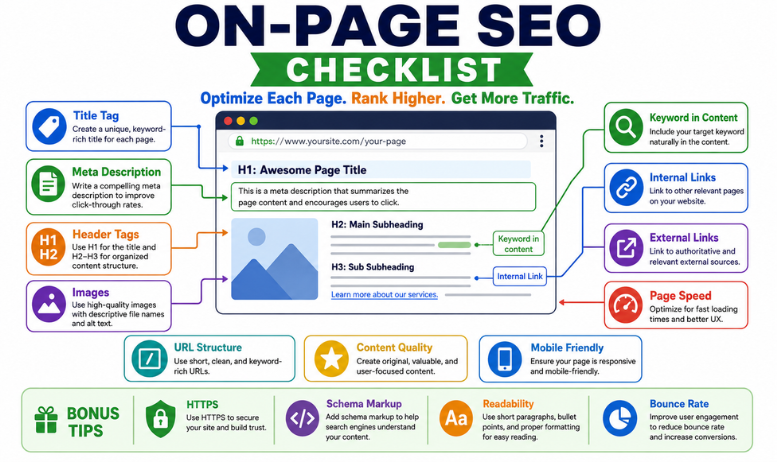
On-Page SEO Checklist: 11 Essential Steps to Rank Higher in 2026
On-page SEO is the foundation of every successful website. No matter how great your content is, if search engines can’t understand it or users can’t navigate it, your rankings will suffer. The good news? Optimizing each page follows a repeatable process. This on-page SEO checklist walks you through 11 essential steps (plus bonus tips) to help you rank higher, drive more traffic, and deliver a better user experience.
Why On-Page SEO Still Matters in 2026
Search engines have become smarter, but the fundamentals haven’t changed. On-page SEO tells Google what your page is about and signals whether it deserves to rank. Get these elements right and you build a strong foundation that supports every other marketing effort. Let’s break it down.
The Complete On-Page SEO Checklist
1.Title Tag
Your title tag is the first thing users and search engines see. Write a unique, keyword-rich title within 50-60 characters so it displays fully in search results and encourages clicks.
2.Meta Description
Craft a compelling meta description of 150-160 characters that includes your primary keyword. While it isn’t a direct ranking factor, a persuasive description boosts click-through rates.
3.Header Tags
Structure your content with header tags. Use one H1 for the main title, then H2 and H3 tags for subheadings. This improves readability and helps search engines understand your content hierarchy.
4.Images
Use relevant, high-quality images. Optimize file names and always add descriptive alt text with your target keywords so search engines can index them and improve accessibility.
5.Keyword in Content
Include your primary keyword naturally throughout the content. Avoid keyword stuffing. Write for humans first and let the keywords fit organically.
6.Internal Links
Link to other relevant pages on your website. Internal links improve navigation, distribute authority across your site, and keep visitors engaged longer.
7.External Links
Link out to authoritative and relevant external sources. This adds value for readers and signals to search engines that your content is well-researched and trustworthy.
8.Page Speed
A slow page kills rankings and frustrates users. Optimize your page speed through image compression, caching, and clean code for a smoother experience and higher rankings.
9.URL Structure
Keep URLs short, clean, and readable. Include your target keyword and avoid unnecessary parameters or numbers.
10.Content Quality
This is the heart of on-page SEO. Create valuable, original, and in-depth content that genuinely satisfies user intent. Quality content earns links, shares, and long-term rankings.
11.Mobile Friendly
With mobile-first indexing, your page must be fully responsive. Ensure it looks and functions perfectly across all devices and screen sizes.
Bonus Tips to Maximize Your Rankings
Beyond the core checklist, a few extras give you an edge:
- HTTPS: Secure your site with an SSL certificate to build trust and protect user data.
- Schema Markup: Add structured data to help search engines understand your content and earn rich results.
- Readability: Use short paragraphs, bullet lists, and simple language so anyone can scan and understand your page.
- Bounce Rate: Improve user engagement with clear layouts and internal links to reduce bounce rate and increase rankings.
Final Thoughts
On-page SEO isn’t a one-time task, it’s an ongoing process. By following this on-page SEO checklist for every page you publish, you create a consistent, search-friendly experience that both Google and your visitors will love. Start optimizing today, track your results, and watch your organic traffic climb.
Ready to take your website’s SEO to the next level? Explore more expert guides at TechEnvision and turn your traffic goals into reality.