
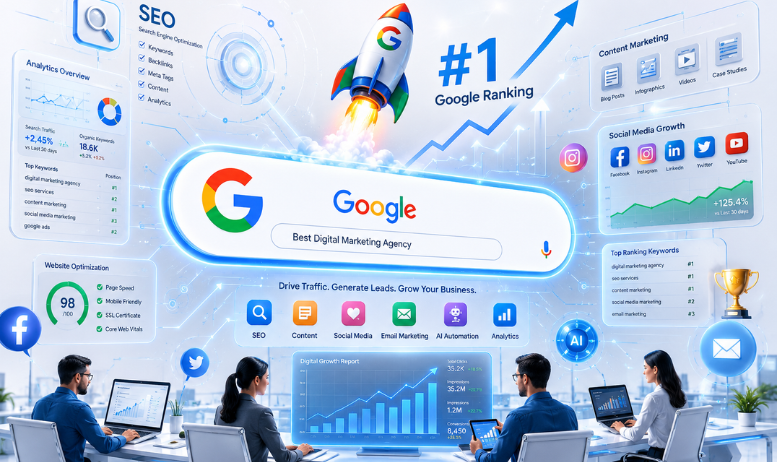
Why Most SEO Strategies Fail to Rank on Google
Here’s the thing… Most businesses don’t fail at SEO because they’re lazy. They fail because they treat SEO like a checklist instead of a connected system. They publish blogs. They add keywords. They install SEO plugins. Maybe they even hire an agency. But months later? Traffic barely moves. Rankings disappear overnight. And leads never really become consistent. If you’ve ever felt like your SEO efforts should be working better than they are, you’re definitely not alone.
The Biggest SEO Mistake Most Businesses Make
A lot of SEO strategies look good on paper. But behind the scenes, everything is disconnected. You’ll often see businesses doing things like: Targeting keywords without understanding user intent Publishing content just to stay “active” Ignoring technical SEO issues because they seem difficult Tracking analytics without making meaningful decisions Individually, none of these things are terrible. But together? They create weak SEO foundations. And that’s usually why rankings never stick long-term.
SEO Is Bigger Than Keywords
This is where many people misunderstand SEO. They assume ranking on Google is only about adding keywords into content. It’s not. Google has evolved far beyond simple keyword matching. Today, search engines evaluate the overall experience your website creates. That includes: Whether your content genuinely helps users Website speed and performance Mobile usability Internal linking structure Search intent alignment User engagement signals In other words, SEO is no longer one isolated task. It’s an ecosystem. And when one part becomes weak, the entire strategy suffers.
What Strong SEO Strategies Do Differently
Businesses that consistently rank well usually focus on alignment instead of shortcuts. Here’s what separates them from average SEO efforts.
They Start With Search Intent
Good keyword research is not just about search volume. It’s about understanding why users are searching.
For example: “Best SEO tools” → comparison intent “How to fix indexing issues” → informational intent “SEO agency near me” → transactional intent Completely different intentions. And if your content doesn’t match what users expect, rankings become difficult no matter how optimized the page looks.
They Create Content That Solves Real Problems
Google is flooded with generic content today. Most blogs repeat the same information with slightly different wording. That’s why shallow content struggles. The pages performing best usually: Explain complex topics simply Share real examples or experiences Answer specific questions clearly Help users make faster decisions One website we observed improved organic traffic significantly after converting thin blog content into practical, user-focused guides. No hacks. No shortcuts. Just genuinely helpful content.
⚙️ They Don’t Ignore Technical SEO
Even great content can fail when the technical foundation is weak. Some common SEO issues include: Slow page speed Broken internal links Poor mobile optimization Duplicate content Weak website structure Indexing errors Technical SEO helps search engines access, understand, and trust your website. And often, fixing technical issues delivers faster gains than publishing more random content.
They Actually Use Their Data
Many businesses check analytics. Very few use analytics strategically. Traffic numbers alone mean very little unless you understand: Which pages generate conversions Where users leave the website Which keywords bring qualified traffic What content keeps people engaged That’s where SEO becomes strategic instead of reactive. Because data should guide decisions not just fill reports.
The Real Difference Between Average and Strong SEO
Average SEO focuses on pages. Strong SEO focuses on systems. That’s the difference most businesses miss. When your SEO becomes a connected growth engine: Rankings become more stable Organic traffic compounds over time Content performs longer Lead generation becomes more predictable Eventually, you stop constantly chasing rankings. Because your website itself starts supporting long-term growth naturally.
Final Thoughts
If your SEO strategy isn’t delivering results yet, it doesn’t always mean you need to work harder. Sometimes you simply need a more connected approach. Because long-term SEO growth rarely comes from random tactics. It comes from building systems that work together consistently. And honestly? That’s what Google has been rewarding all along.