
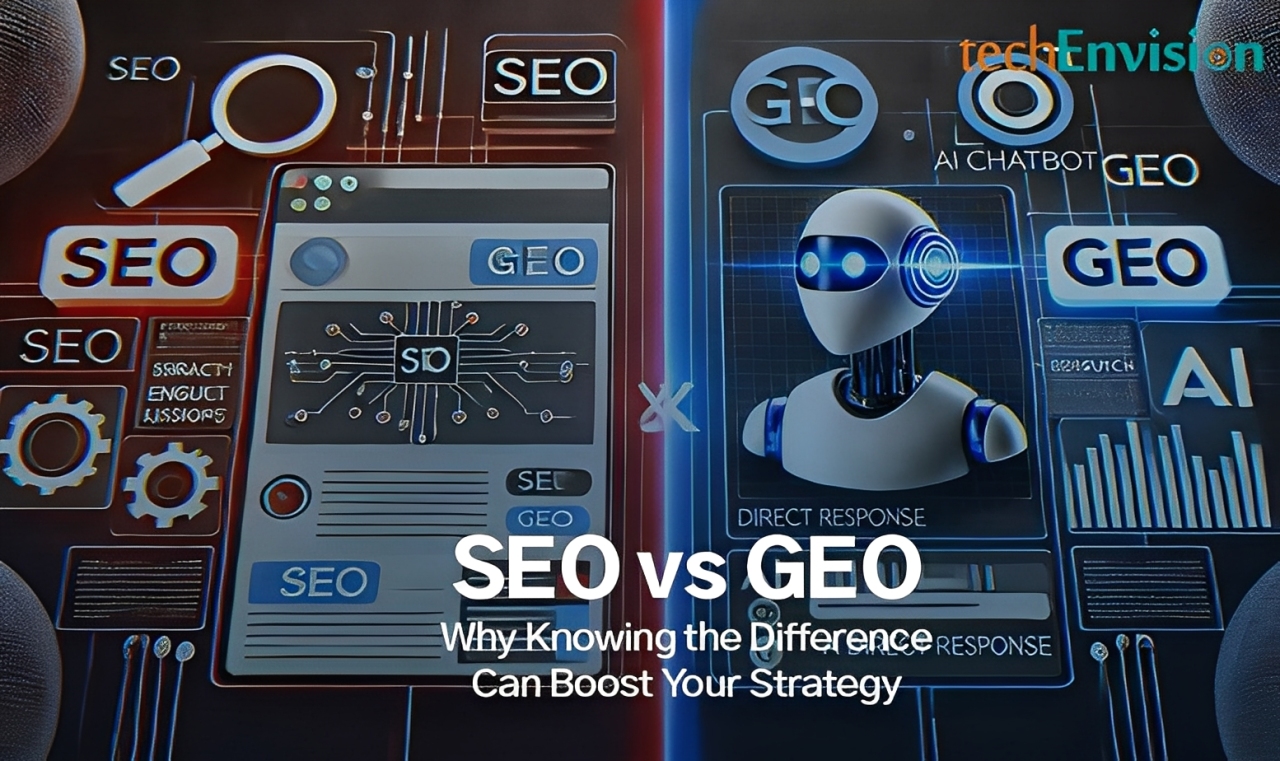
SEO and GEO: Why Knowing the Difference Can Boost Your Strategy
Drive Traffic with Targeting
In today’s digital era, excelling in online visibility has become vital for businesses across industries. Two crucial concepts often discussed — SEO (Search Engine Optimization) and GEO (Generative Engine Optimization) — play distinctive roles in enhancing your content’s reach. Understanding the difference between SEO and GEO is now more important than ever if you want to design an efficient digital strategy that leverages both traditional and AI-powered search methods.
What Is SEO? The Foundation of Online Visibility
SEO is the traditional powerhouse behind driving organic traffic to websites through search engines like Google, Bing, and Yahoo. The primary objective of SEO is to improve a website’s placement on Search Engine Results Pages (SERPs) by optimizing various factors.
The SEO process typically involves:
-
Keyword Research: Identifying relevant keywords potential users input during searches.
-
On-Page Optimization: Using those keywords strategically in titles, headings, meta descriptions, and content.
-
Technical SEO: Ensuring website speed, mobile optimization, secure connections, and crawl accessibility.
-
Off-Page SEO: Building backlinks and social proof that increases domain authority.
Search engines deploy bots to crawl the web, index pages, and rank them based on relevance, authority, and user experience signals. SEO helps your site climb these rankings, making it more likely users will click on your links from the “ten blue links” list that dominates traditional search results.
What is GEO? The New Frontier in AI-Driven Search
GEO, or Generative Engine Optimization, is the rising counterpart optimized for AI-driven platforms such as ChatGPT, Google AI Overviews, Gemini, and other generative search engines. Unlike traditional search engines that show link lists, these AI platforms synthesize information from multiple sources to deliver comprehensive, direct answers within their interface.
Key aspects of GEO include:
-
Content Authority: Your content needs to be factual, clearly structured, and demonstrably expert to be quoted or cited.
-
Content Structure: Well-organized facts, concise explanations, and FAQ sections help AI easily extract your information.
-
Continuous AI Learning: Unlike periodic algorithm updates in SEO, GEO content is absorbed and assessed continuously by evolving AI models.
GEO’s goal is to get your content referenced frequently in AI-generated responses, boosting brand visibility in ways beyond direct website clicks.
SEO vs GEO: Side-by-Side Comparison
|
Aspect |
SEO |
GEO |
|
Target Platforms |
Traditional search engines (Google, Bing) |
AI-powered platforms (ChatGPT, Google AI) |
|
User Experience |
Lists of links requiring clicks |
Instant, synthesized answers without clicks |
|
Content Focus |
Keyword-optimized, backlink-driven |
Clear, authoritative, structured content |
|
Ranking Factors |
Algorithms based on keywords, backlinks, site performance |
AI evaluation of content quality, structure, authority |
|
Success Metrics |
Traffic, rankings, CTR |
Citation frequency, AI response inclusion |
|
Traffic Source |
Direct website visits |
AI-referred traffic, brand mentions |
Why Understanding This Difference Is Critical for Your Strategy
The evolving digital landscape demands brands no longer rely solely on SEO. Since AI-generated overviews now represent up to 47% of Google searches, ignoring GEO risks losing a significant portion of the audience.
Traditional SEO content entices users to browse your site through relevant links, increasing engagement and conversions. GEO content, however, positions your brand as a trusted authority within AI answers, often reducing the number of clicks but increasing brand awareness and trust.
For marketers looking to future-proof their efforts, integrating both approaches is essential for holistic digital presence. It allows you to capture traffic from diversified sources, addressing different user search intents and behaviors.
How to Combine SEO and GEO for Maximum Impact
-
Focus on Quality Content That Meets E-E-A-T Guidelines
Both SEO and GEO reward expertise, experience, authoritativeness, and trustworthiness. Create in-depth, accurate content researched to serve your audience’s needs comprehensively. -
Structure Content for Readability and Extraction
Use clearly defined headings, bullet points, and FAQ sections. This ensures content is easy for users to scan and for AI systems to extract relevant information. -
Employ Keyword Optimization—But Naturally
Maintain a keyword density of 1 to 1.5% to signal relevance for SEO without keyword stuffing. For GEO, balance keywords with clear factual statements to meet AI content quality standards. -
Utilize Schema and Structured Data
Mark up your content with relevant schema to enhance SEO’s rich results and provide AI systems with parseable data that aids in content absorption. -
Optimize for Conversational Queries
Incorporate natural language questions and answers to align with voice search and AI’s conversational style. -
Monitor Both Traditional SEO Metrics and AI Citation Metrics
Track organic traffic, rankings, and click-through rates alongside AI citation frequency, referral traffic from AI sources, and brand mentions. -
Update Content Regularly
SEO rankings benefit from fresh content, but GEO relies heavily on up-to-date facts and authoritative answers. Keep your content current and accurate.
Conclusion: Embrace the Synergy of SEO and GEO
Understanding the difference between SEO and GEO, and how to strategically combine them, is the key to thriving in an AI-saturated digital environment. While SEO continues to be vital for attracting users through traditional search pathways, GEO expands your brand’s reach to the growing realm of AI-powered generative search queries.
By creating content that is both keyword-optimized and structured for AI extraction, businesses can increase visibility across all channels—ensuring they capture user attention whether they prefer the classic search engine or the emerging AI conversational interfaces.
This balanced approach builds authority, enhances user experience, and ultimately drives better qualified leads and conversions. For brands serious about digital growth, SEO vs GEO is not a choice—it is a dual strategy for success.
About Us
techEnvision.in is dedicated to empowering businesses, marketers, and SEO professionals with the latest insights, news, and tutorials covering the digital landscape. Our mission is to provide clear, actionable, and up-to-date information on search engine optimization, web technologies, and digital strategy. Stay tuned for more updates as we continue to bring clarity to a rapidly changing online world.
Contact Us:
techEnvision
Email Address: [email protected] | [email protected]
Phone Number: +91 9561770305 | +91 8421770305
Website: https://www.techenvision.in/